
Know these two terms first
Many mistakes happen because priority and giving way are treated as the same thing.
- Voorrang verlenen, giving priority
- This concerns drivers in relation to other drivers. Under Dutch traffic rules, a driver is any road user except a pedestrian.
- Voor laten gaan, letting someone go first
- This is broader. It can also concern pedestrians, passengers and other road users.
1. First check who or what controls the traffic
Do not begin with the rule about traffic from the right. Follow this order and stop as soon as something controls the situation.
- A direction from an authorised police officer or traffic controller comes first.
- A traffic light takes precedence over signs that control priority.
- Priority signs and shark teeth markings take precedence over the ordinary traffic rule.
- Use the ordinary traffic rule only when nothing else controls priority.
RVV articles 63, 64, 80 and 84
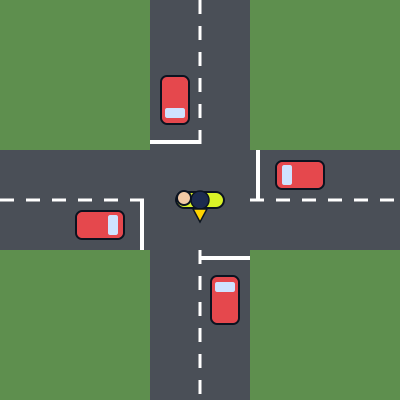
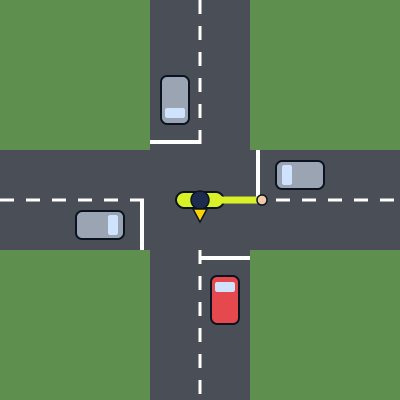
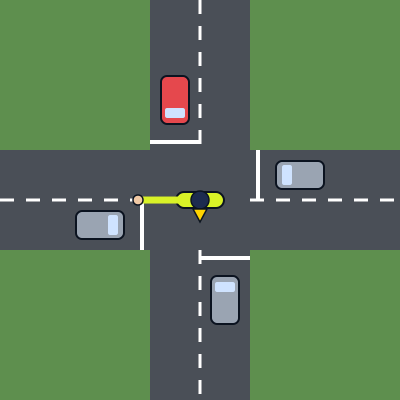
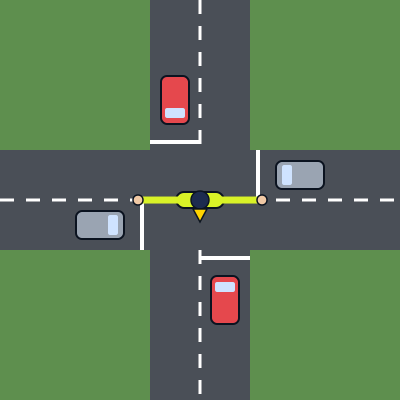
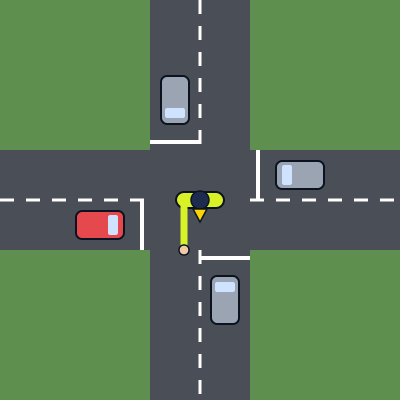
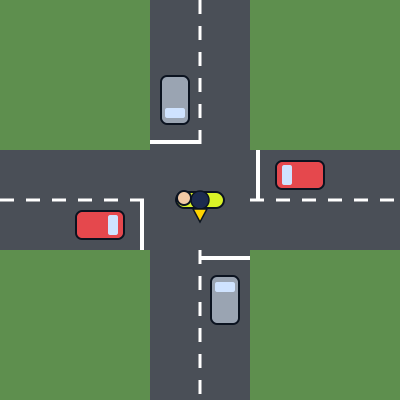
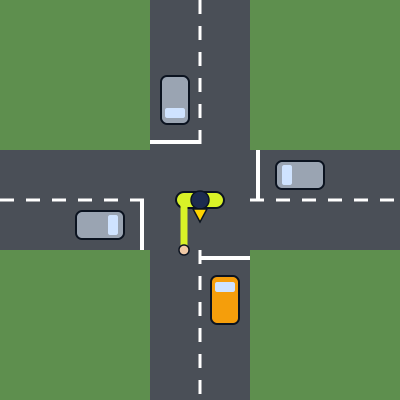
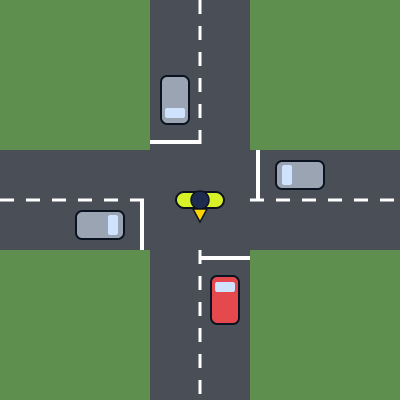
2. An uncontrolled intersection
Are there no lights, priority signs or shark teeth markings? The intersection is normally an equal intersection.
- Drivers give priority to drivers approaching from their right.
- A driver on an unpaved road gives priority to drivers on a paved road.
- When only the ordinary rules apply, drivers give priority to a tram.
- A pedestrian is not a driver and does not automatically receive priority just because they approach from the right.
RVV article 15
The orange car approaches from the blue car’s right, so the orange car goes first.
3. Priority signs and shark teeth markings
Signs and road markings show which road has priority. Check the sign and marking that apply to your direction.
- B1 means you are driving on a priority road.
- B6 means you give priority to drivers on the crossing road.
- B7 means you stop first and then give priority to drivers on the crossing road.
- Shark teeth markings on their own also mean that drivers give priority to drivers on the crossing road.
RVV articles 63 and 80, annex 1 signs B1, B6 and B7
B1 priority road, B6 give priority and B7 stop and give priority.
4. Turning: traffic continuing on the same road goes first
When you turn, let traffic continuing on the same road go first. This may be a car, cyclist or pedestrian.
- Check beside you and close behind you. A cyclist continuing straight may be in your blind spot.
- If you turn left while an oncoming driver turns right at the same intersection, the short turn goes before the long turn.
- These two turning rules do not apply to a tram. Always check whether lights, signs or directions decide something else.
RVV article 18
The cyclist continues on the same road. The turning car waits.
5. Pedestrians and zebra crossings
A pedestrian is a road user, but not a driver. You therefore need to identify the rule that protects the pedestrian.
- At a zebra crossing, let pedestrians and users of disability vehicles go first when they are crossing or clearly about to cross.
- Always let a blind person with a white cane with red rings, or a person who is visibly having difficulty walking, go first. A zebra crossing is not required.
- When turning, let traffic continuing on the same road go first. This also applies to a pedestrian following that road.
- The zebra crossing rule does not apply when the pedestrian has a red pedestrian light or the applicable flashing yellow light. You must still drive safely.
RVV articles 18 and 49
The pedestrian is clearly about to cross. The car stops and lets the pedestrian go first.
6. Situations you need to know separately
These rules do not all fit one intersection, but they appear regularly in theory questions.
- A driver performing a special manoeuvre, such as moving off, reversing, making a U turn, changing lanes or leaving an exit, lets all other traffic go first.
- All road users let a priority vehicle using the required blue flashing lights and siren go first.
- Inside a built up area, drivers give a bus the opportunity to leave a bus stop when its driver indicates.
- When passing a stationary tram or bus on the side where passengers board or leave, give those passengers the opportunity to do so safely.
RVV articles 50, 52, 54 and 56
7. Know all seven priority signs
The B signs decide who goes first at a junction. Also read the shark teeth facing your direction.
- B1 starts a priority road and B2 ends it. B3, B4 and B5 give priority at the next junction.
- At B6, give priority. At B7, stop completely and then give priority.
- Shark teeth tell drivers to give priority to drivers on the crossing road. They do not independently give priority to a pedestrian.
8. Read the controls at a roundabout
A circular shape does not give priority. Read sign D1, sign B6 and the shark teeth separately.
- D1 requires you to follow the indicated direction around the roundabout. It does not give priority.
- B6 and shark teeth require you to give priority to drivers on the crossing road.
- When B6 and shark teeth face the entrance, traffic entering lets traffic already on the roundabout go first.
9. Leaving an exit
A recognisable exit often has a continuing pavement, cycle path or lowered exit construction.
- A driver leaving an exit performs a special manoeuvre.
- Therefore let every other road user go first, including pedestrians and cyclists on the continuing path.
- Stop before the pavement and cycle path when you cannot yet see them completely.
RVV article 54
10. Funeral procession and military convoy
Recognise both groups by their legally prescribed flags. New recognition markings for military convoys have applied since 1 January 2025.
- Every vehicle in a funeral procession carries two black triangular flags, one on each side. Each flag has a white retroreflective border and three white retroreflective stripes.
- The first military vehicle carries one blue flag at the left front. Intermediate vehicles may optionally carry one blue flag at the left front. The last vehicle carries one green flag at the left front.
- Every military-convoy vehicle uses at least dipped headlights by day and night. Blue and green headlamp filters have not been required since 1 January 2025.
- Do not drive between the vehicles after the procession or convoy has started passing. The first vehicle follows ordinary priority rules.
- If a military convoy starts passing at green, it may continue when the light changes. This does not apply to a funeral procession.
RVV articles 16, 30c and 68(4); Military Convoy Recognition Markings Regulation; Motor-Vehicle Funeral Procession Recognition Marking Decree
What to remember before the exam
If you can explain these rules without help, you understand the core of this topic.
- First directions, then traffic lights, then signs, then the ordinary rule.
- At an equal intersection, drivers approaching from the right receive priority.
- Unpaved gives way to paved, and drivers give priority to a tram when only the ordinary rules apply.
- Turning traffic lets traffic continuing on the same road go first.
- A special manoeuvre means you let all other traffic go first.
- For pedestrians, look for a zebra crossing, a turning situation, a disability or another specific rule.
Check yourself
Think first. Then open the answer.
1You reach an equal intersection. A car approaches from the right. Who goes first?Show the answer
2You turn right. A cyclist beside you continues straight on the same road. Who goes first?Show the answer
3Do shark teeth markings by themselves give a pedestrian priority?Show the answer
4A tram approaches from the left at an equal intersection. There are no lights or signs. Who goes first?Show the answer
Official sources
This explanation was written using the official CBR topics and the current Dutch Traffic Rules and Signs Regulations 1990.
Up to date
Try this in the free trial exam
You have read the rules. Now see if you recognise them in questions like the ones on the exam. The trial exam is free and needs no account.
Start the free trial examContinue with the next topic
Every topic uses the same clear structure: short explanations, checked visuals, smart review and check questions.
Back to the overview